Chicago has had a long problem with tow trucks that show up at crashes uninvited, push drivers to sign, and then take the car to a yard that charges whatever it wants. Illinois law now requires tow operators at accident scenes to give you a written estimate and to get your authorization before towing. We follow that, and we'd encourage you to use it with anyone who arrives on scene.
What to do in the first ten minutes
- Check for injuries and call 911 if anyone is hurt, the cars are blocking traffic, or anyone seems impaired.
- If the cars can be moved and no one is hurt, Illinois law expects you to get them out of the traffic lanes.
- Take photos of both cars, the plates, the street signs and the other driver's insurance card.
- Then call the tow company you choose. If a truck shows up that you didn't call, you don't have to use it.
What our driver does on scene
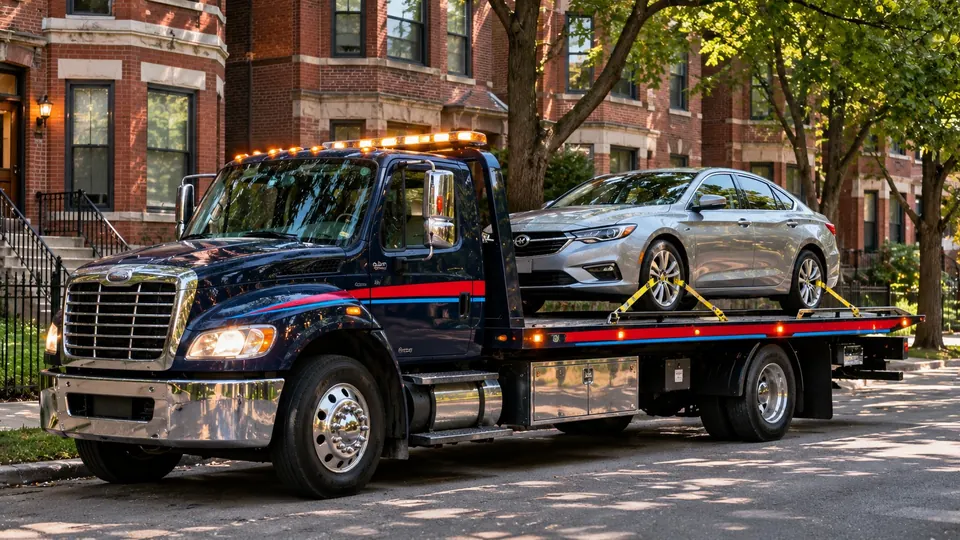
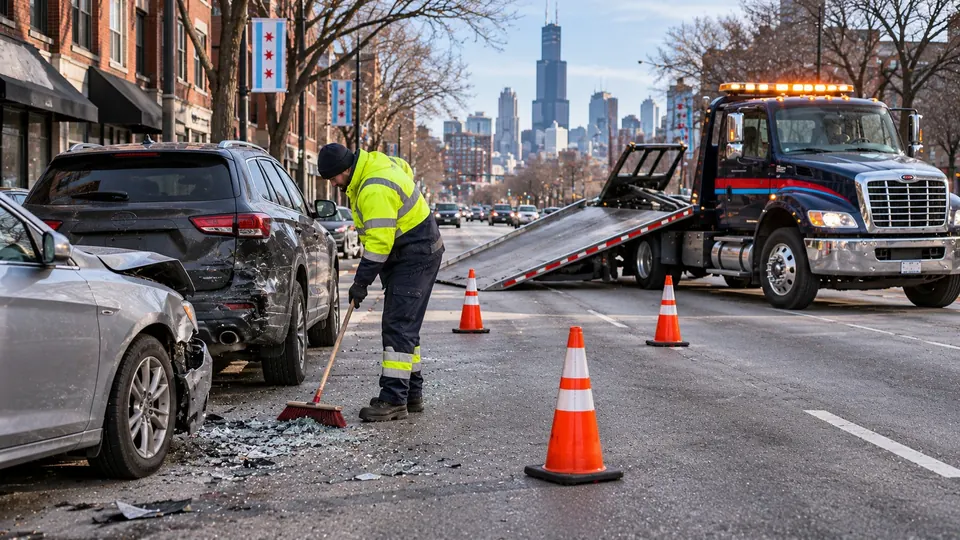
We check whether the car can roll and steer, and use a flatbed for anything that can't. Loose bumpers and fenders get secured so they don't fall off on the way. We sweep up glass and plastic from the lane — it's expected of tow operators, and it keeps the next driver from getting a flat. You'll get a receipt with the pickup location and drop-off address for your insurance claim.
Where the car goes
The body shop you or your insurer prefer, a dealer, your home, or our yard if you need time to decide. Storage at our yard is billed per day — we'll tell you the rate upfront so you can move the car quickly if you want.
If police ordered the tow
When Chicago police order a tow because a car is a hazard or the driver is arrested, the city's contracted tow service takes it to a city auto pound. We can't intercept those. Our guide on getting a towed car back in Chicago explains what to do next.