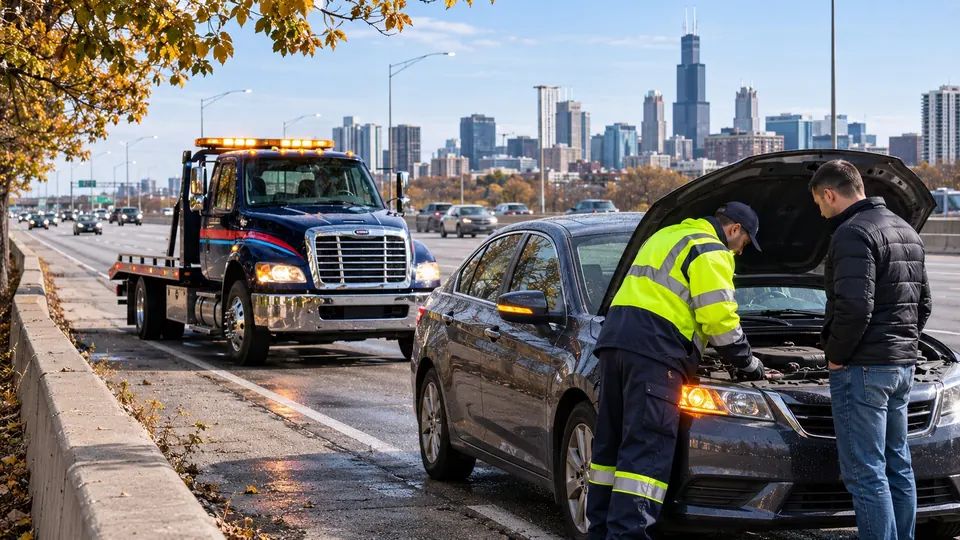

Chicago winters are rough on batteries. A battery that cranked fine all fall can lose a big chunk of its power on a sub-zero night, and cars that sit on the street for a few days during a cold snap are the first to go. We use commercial jump packs, so we don't need to park nose-to-nose with your car — useful when you're boxed in on a residential street or wedged into a garage space.
What the driver checks
Before connecting anything we look at the battery terminals. Heavy white or green crust can block current, and sometimes cleaning the clamps is the whole fix. After the jump we test voltage with the engine running. If the reading stays low, the alternator isn't charging and the car will die again — usually within a few miles. We'd rather tell you that in the driveway than have you stuck on Western Avenue twenty minutes later.
Cars that need extra care
- Start-stop and AGM batteries — many newer cars use these, and they don't like being jumped carelessly. We follow the car's jump points.
- Batteries in the trunk or under the seat — BMW, Mercedes, some Chryslers. The car usually has remote jump posts under the hood; we'll find them.
- Hybrids and EVs — the 12-volt battery can die even when the main battery is charged. A small boost to the 12V usually wakes the car up.
If a jump isn't enough
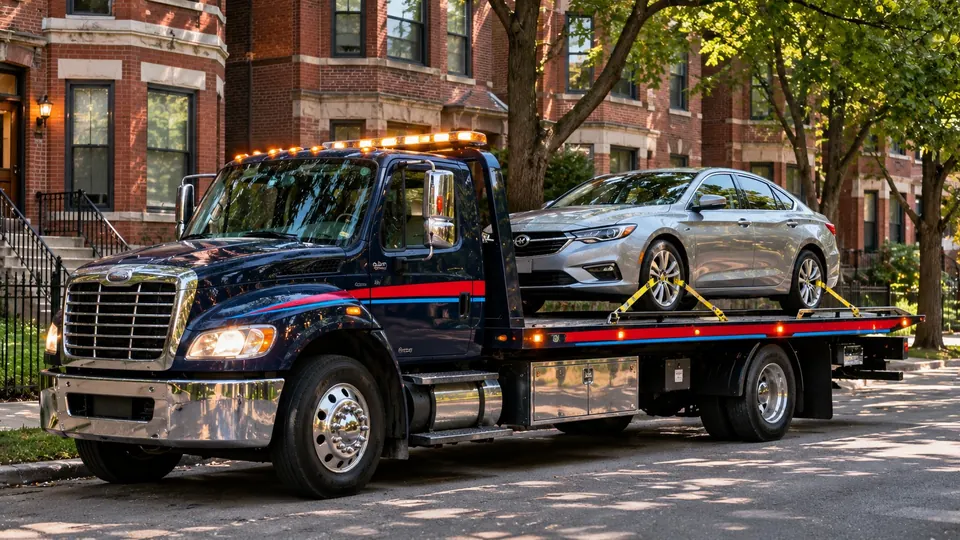
A battery older than about four or five years that's been fully drained in the cold often won't hold a charge again. If it won't start after a proper jump, or there's a burning smell, a cracked case or a starter that just clicks, we'll offer a tow to a shop or parts store.