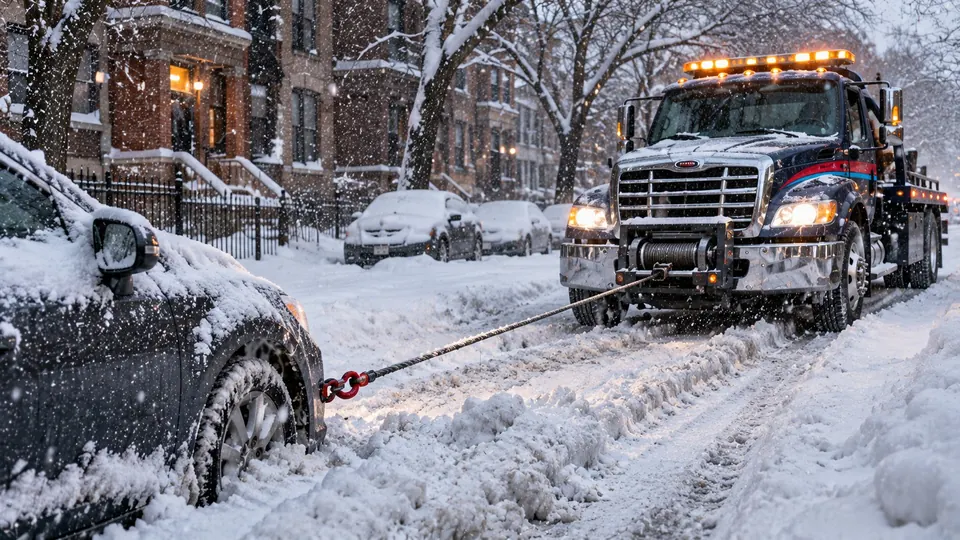
After a heavy snowfall, side streets in Chicago can go days without a plow, and the ruts freeze into ice ridges that trap cars. In the suburbs and forest preserves, the problem is more often a soft shoulder or a ditch. A winch-out means we anchor our truck, run a cable to a proper recovery point on your car, and pull it back to solid ground in a controlled way.
Why not just push it?
Rocking a car back and forth or flooring it in the snow overheats the transmission and can burn through a CV joint. Strangers pushing on the bumper while the wheels spin is how people get hurt. A winch does it slowly and in a straight line.
How we do it without damage
We attach to the car's tow hook or frame recovery point — never to a bumper cover, a suspension arm or a plastic tow eye cover. If the car is at an awkward angle in a ditch, we use a snatch block to change the pull direction so the car comes out straight. Then we look underneath for anything hanging or leaking before you drive off.
When it becomes a tow
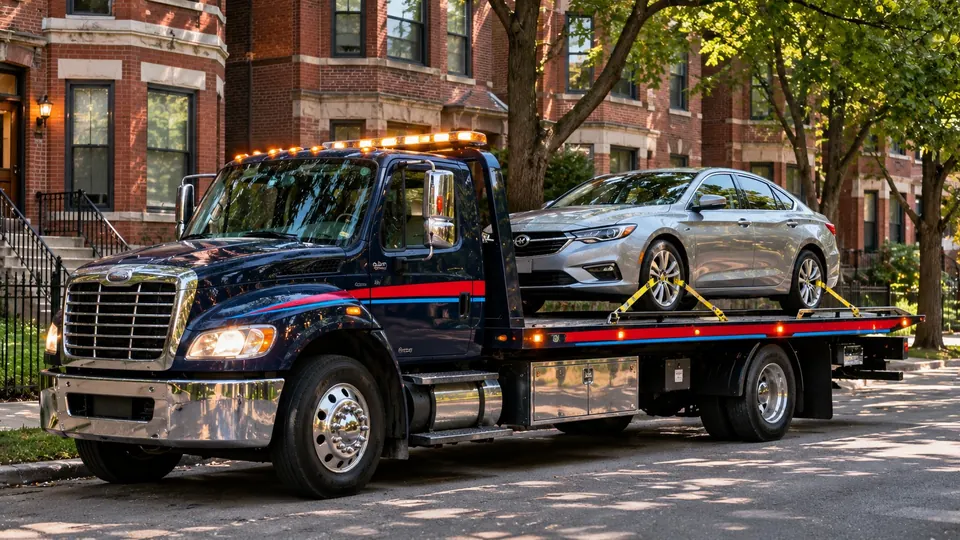
If the car hit something on the way into the ditch — a culvert, a pole, a fire hydrant — or there's damage to a wheel or suspension, we'll load it on a flatbed after the recovery rather than letting you drive on it.